











First thing required for Kerala's new government: financial discipline
text_fields

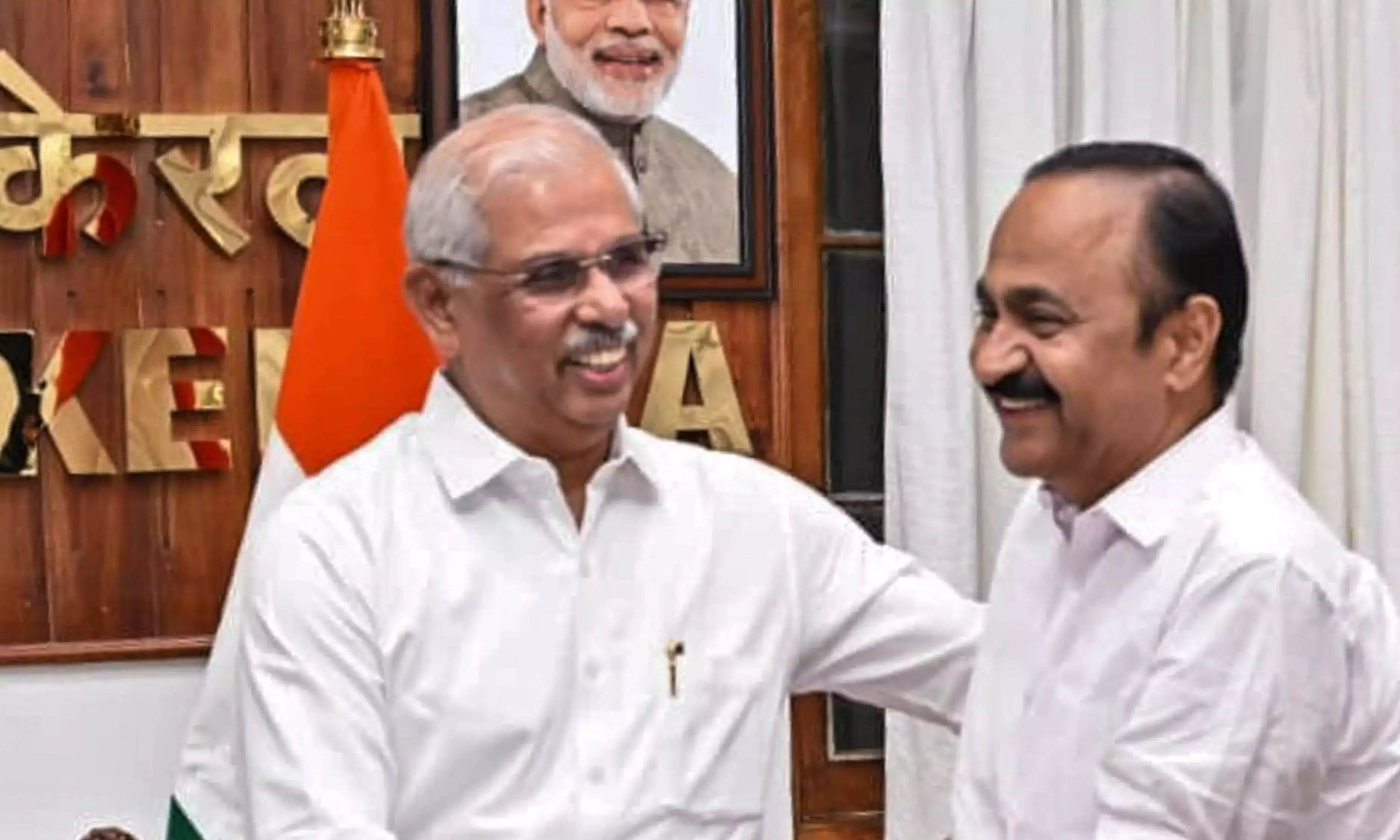
Only two weeks have passed since Kerala's United Democratic Front (UDF) ministry led by V. D. Satheesan assumed office. In the meantime, the Governor’s policy address has been delivered in the state Assembly, and the discussion on it has also begun. The UDF government, which returned to power after a gap of ten years, has created huge expectations among Kerala’s 3.5 crore people. However, fulfilling even half of those expectations over the next five years would require funds running into several lakh crores of rupees. It is evident that the revenues generated through the state’s existing agriculture, trade, and industrial sectors alone will not be sufficient to meet the demands of development and the resolution of major problems of the people. For decades, Kerala has been constrained by a situation in which a large share of its tax revenue has to be spent on salaries and related expenses for government employees. The inadequacy of the states’ share of GST revenue has also remained a persistent concern for state governments. Both the Left Democratic Front and the UDF governments speak in one voice when it comes to complaining about the Union government’s neglect of the state. Meanwhile, the burden of public debt has continued to grow without any significant reduction. The heavy interest payments associated with this debt place a severe strain on the state treasury. As long as Kerala remains primarily a consumer state rather than a major producer, this situation is likely to persist. The contribution of expatriate Keralites has played a crucial role in sustaining the state’s economy without whose support, the state would have faced far greater financial difficulties long ago.
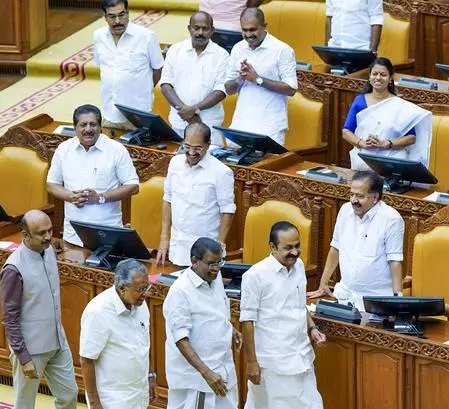
A clearer picture of Kerala’s economic condition is expected to emerge in the coming days when the Chief Minister, who also holds the finance portfolio, presents a white paper before the Legislative Assembly outlining the state’s financial situation. At the same time, the immediate question is whether the Satheesan government can be expected to undertake serious reconsideration and corrective measures in a state that continues to move from one debt trap to another. If such reforms are to be expected, they should begin with addressing the large number of personal staff attached to each member of the 21-member Council of Ministers, as well as to the Speaker, Chief Whip and other office-bearers. The substantial financial burden that these appointments place on the public treasury deserves close scrutiny. It must also be acknowledged that a ministry consisting of twenty ministers in addition to the Chief Minister is itself quite large. The usual justification is that such a sizeable cabinet became necessary to accommodate the various constituents of the ruling front, which includes four relatively large parties and two single-member parties. Even if that argument is accepted, the question remains why each minister requires a personal staff of 25 to 30 individuals. As of now, the situation requires extraordinary patience to select the right people from the thousands of applications for personal staff membership that each party leadership has already received. It is said that a large number of aspirants, along with their supporters, have gathered in the state capital in the hope of securing such posts. Those who worked to ensure electoral victories and helped secure ministerial positions cannot be ignored. As a result, even during periods when parties with strict organisational structures, such as the communist parties were in power, the tenure of personal staff members was reduced to two and a half years and made the public treasury bear the unaffordable costs of benefits.
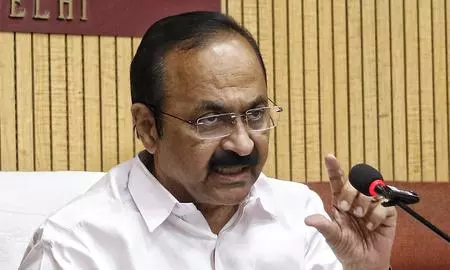
There is considerable public expectation that Chief Minister V. D. Satheesan will address this issue. The government’s decision to stipulate that personal staff members must serve a minimum of four years to qualify for certain benefits like pension, and that those serving shorter terms would not be entitled to such benefits, has been widely welcomed. However, even for cabinet members handling minor departments, the number of staff should be realistically reduced from 25-30. However, the injustice of granting the same pay scale as IAS officers by assigning posts like Private Secretary, Additional Private Secretary, and Special Private Secretary to those without any educational qualifications cannot be justified in any sense. Those drawing salaries of more than ₹70,000 are entitled to travel by first-class train, while those earning above ₹77,000 can avail themselves of air travel facilities at government expense. In addition, they become eligible for lifelong pension proportionate to their service. Such attractive salaries, allowances and pension provisions help explain why party workers and supporters often compete intensely for appointments to ministers’ personal staff, sometimes investing considerable effort and resources to secure these positions. And this when even Union Cabinet ministers are permitted to appoint only a limited number of personal staff, while the remaining support personnel are drawn from the regular government service. Apart from the large ministerial paraphernalia, the state also has numerous government-run corporations, boards, academies, councils and similar institutions. Many of these bodies continue to exist regardless of whether they remain necessary or relevant. There is a question about the need for such a large number of committees and institutions when each ministry in a 21-member cabinet already has extensive administrative support. Every such body requires a chairperson or head, who is often provided with official facilities such as a vehicle, driver, office space and personal staff. In addition, meetings, administrative expenses and office rentals add further costs that are ultimately borne by the public treasury. If the government undertakes a comprehensive review of these institutions and retain only those that are genuinely essential, it will lighten the burden on the exchequer to that extent. Will V.D. Satheesan and his colleagues--who were voted into power by the people for change--seriously contemplate financial discipline?