







67 cases of Hindutva violence against Muslims recorded in February alone: Report
text_fields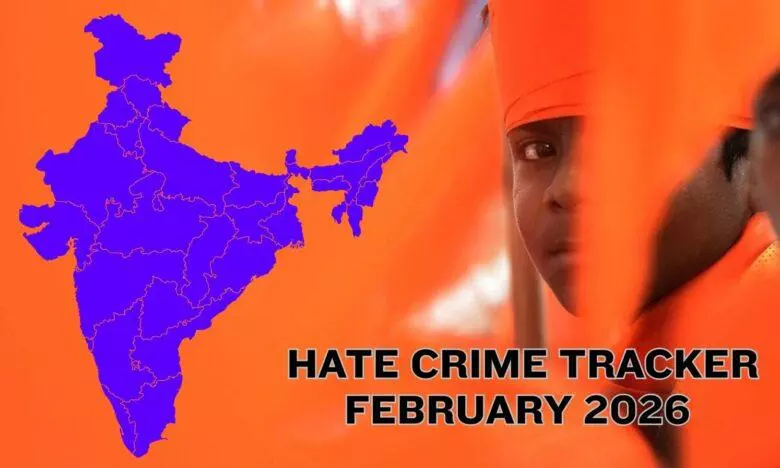

The communal bigotry being spread by right-wing Hindutva groups and targeting minority communities, particularly Muslims, has risen to such an unprecedented height that a report compiled by Siasat.com showed no fewer than 67 hate crimes being recorded across India in the last month alone, which is a 59.5 per cent rise as compared to January, while UP recorded the highest number with 20 cases, followed by Telangana with 14, of which 13 were against Muslims and one against Dalits.
The month witnessed not merely sporadic hostility but a sustained pattern of social exclusion, institutional manipulation and digital incitement, as ten Muslim families in Madhya Pradesh’s Balaghat district reportedly endured a social boycott after a Mahasabha resolution urged Hindus to sever economic and personal ties.
In Uttar Pradesh, a Booth-Level Officer alleged that objections were filed seeking the deletion of 86 Muslim names from the electoral rolls, even though the individuals were found alive and residing locally.
Early February further saw the circulation of an AI-generated video from the BJP’s official social media handle depicting Assam Chief Minister Himanta Biswa Sarma firing at Muslim men, which drew widespread condemnation before being deleted.
Discrimination also manifested in public spaces, including the humiliation of a Muslim khova bun vendor in Telangana accused of “food jihad,” and the sprinkling of cow urine in a Maharashtra temple after a Muslim MLA performed rituals there.
Communal tensions intensified as Ramzan approached, with a mosque vandalised in Telangana’s Yadadiri Bhuvanagiri district, where alcohol bottles were strewn and copies of the Quran desecrated.
In Kamareddy, a Muslim shop owner’s objection to a Hindu saleswoman playing a devotional song at her workplace snowballed into a confrontation that led to stone-pelting between the two communities, injuring several people and resulting in 19 arrests.
Hate speech proliferated at public gatherings, including remarks at the Virat Hindu Sammelan in Delhi, urging weapon storage against alleged Muslim threats, and a repulsive comment such as, “Allah ko bas puncture banana aatha tha (Allah only knows how to repair punctured tyres).”
In Madhya Pradesh’s Sihora town, a Muslim boy was assaulted after urging a Hindu temple to reduce the volume of aarti so that Taraweeh prayers could be held in the nearby mosque, which culminated in violence, and subsequent arrests saw sixty people, mostly Muslims, taken into custody.
Elsewhere, provocative slogans were painted denying Muslims road access near Saharanpur, vigilante assaults were recorded, and incendiary rhetoric at rallies invoked violent imagery without fear of legal consequences, while leaders across states were booked for derogatory statements promoting conspiracy theories such as “love jihad,” thereby normalising Islamophobic discourse.
Parallel atrocities were documented against Dalits and Christians, including attacks on Dalit weddings, sexual assault allegations, and denial of cremation grounds in Bihar, while a Dalit priest in Kerala resigned, citing caste discrimination, and an academic in Punjab alleged prolonged casteist harassment, underscoring that caste prejudice persisted alongside communal hostility.
Yet, amid this polarised environment, isolated instances of solidarity emerged, as students in Lucknow formed a human chain enabling Muslim classmates to offer prayers, water supply to Dalit families in Telangana was restored after intervention, and a government barber shop in Karnataka symbolised incremental resistance to entrenched discrimination.
Sixty-seven incidents in twenty-eight days, roughly one every ten hours, suggested not merely statistical escalation but a deepening social fracture, and observers noted that many cases likely remain undocumented due to fear, silence or invisibility.