











Not wave; but a good undercurrent
text_fields

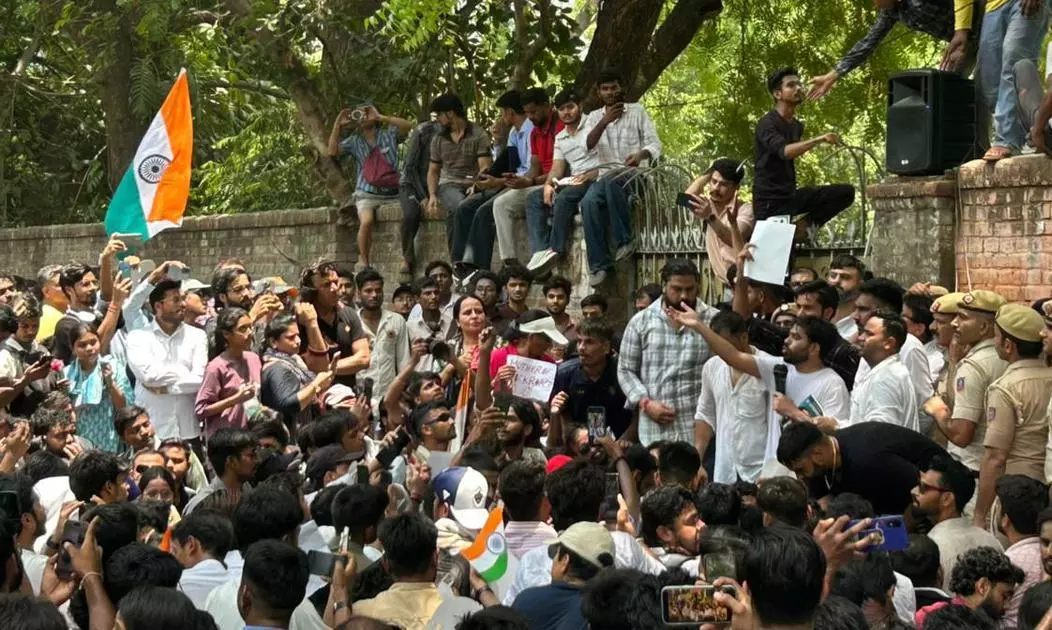
It is not yet known whether the Cockroach Janta Party (CJP), which descended from the digital spheres and gathered at Jantar Mantar, will be transformed into a ‘party’ in a way that justifies its name. The truth is that for now, it is only an organising platform. Saturday saw a powerful demonstration of the discontent spread among the youth, which motivated its mobilisation. The fact that the tens of thousands who gathered there came without external pressure or organisational influences is more meaningful than the strength of the members who came. There was the presence and support of a few prominent figures from the opposition ranks. Although the path from online satire to offline activism will not be easy, the moral outrage against the ruling class is real and strong. That is the intrinsic energy that has allowed it to grow into a popular collective. The catalyst that drives it is not ideological philosophies, but the injustices faced by the people in their daily lives. Founder Abhijeet Dipke, spokespersons Saurav Das, Vijeta Dahiya, Ashutosh Ranka and others are now in the leadership. The main demand they are raising is the resignation of Union Education Minister Dharmendra Pradhan. A change of government or a total struggle against the government is not on their agenda right now.
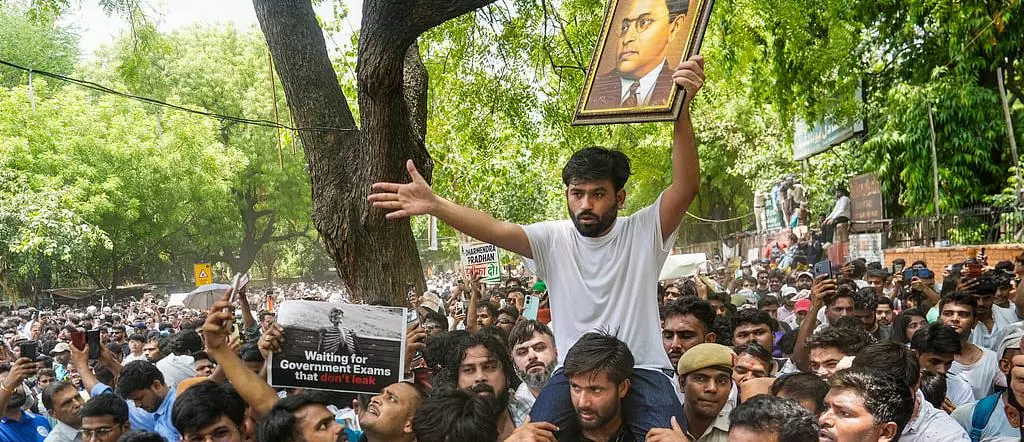
However, what they are raising through the demand for the resignation of the Education Minister is a crucial issue. It is the accountability that the government should have towards the people. The insistence that the elite, who have played with the future of lakhs of students and are responsible for the suicide of more than half a dozen people, must be held accountable is the right start. This could be the first step towards a visible activist system, from a digital platform that expresses dissatisfaction. It is not yet clear whether this will make a significant difference in Indian politics, and if so, what kind of change it will bring. Many remember the unpleasant experience created by the Aam Aadmi Party. At the same time, the arrival of the CJP is a lesson - and a strong warning - not only for the ruling party but also for the opposition. It is fueled by a popular counter-politics that questions the shortcomings and hypocrisy of the traditional 'political profession'. They are giving voice to the aspirations of the general public - especially the youth. It also means that traditional political parties are not able to do that. The 'party' in the name is not its nature, at least for the time being, but rather a satire on traditional parties. Although it has not yet established itself as a political party, it has made an important contribution to today's political landscape: it is an attempt to push aside the climate of division and hatred that is being deliberately cultivated as an illicit political agenda and to bring back the purity, efficiency and accountability of governance to the discussion.

It is also a reminder that what the people want is not slogans, but good results. On one side are the youth who know the pulse of the people, but are unorganised; on the other side are the political parties that are organised but have lost touch with the people. The point where these two meet is the democratic opposition. The main weakness of the CJP, the protest face of the unorganised, is that it does not have the capacity to lead a real political change other than expressing anger. An opposition party must have the capacity to take on that role. The birth of the CJP should help convince the government that there will be a proper audit of the administration, not only in Parliament, but even more strongly among the people. If the government, which tried to suppress even online protests, was finally forced to allow street protests, it must be because it has become aware of the power of the general public. As public activist Yogendra Yadav has pointed out, the Cockroach Janta Party is not a wave now, but it is an undercurrent; that undercurrent of public anger is real. To convert it into a wave, the support of the established political institutions may be needed. The CJP is a timely reminder of the basic truth that parties that see electoral politics and power politics as their main goal should know: that the goal of real politics is not power or governance, but the security and welfare of the people.