









NASA targets April 1st launch for Artemis II crewed Moon flyby mission
text_fields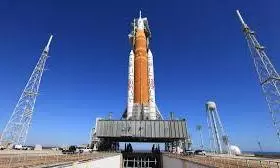

NASA has said it is on track to launch Artemis II, the first crewed flyby mission to the Moon in more than 50 years, as early as April 1, after earlier delays caused by technical difficulties.
Speaking at a press conference on Thursday, senior NASA official Lori Glaze said the agency is working toward the new launch date following a postponement from February. She said the team and hardware were ready, but acknowledged that the test mission still carried risks and required additional work before launch.
The first launch window is expected to open on April 1 at 6.24 pm local time, with several additional opportunities available in the following days.
NASA officials said they expect around four possible launch windows within a six-day period.
The mission will carry three American astronauts and one Canadian astronaut. The crew includes mission commander Reid Wiseman, astronauts Victor Glover and Christina Koch, and Canadian astronaut Jeremy Hansen.
According to NASA mission plans, Artemis II will first orbit the Earth before leaving orbit and travelling toward the Moon. The spacecraft will fly around the Moon without landing and then return to Earth, where it will splash down in the ocean.
NASA said the crew’s closest distance to the lunar surface will depend on the exact launch timing because the Moon’s position changes for each launch date. The spacecraft is expected to pass between about 4,000 and 6,000 miles above the lunar surface.
Although the earlier Artemis I mission passed much closer to the Moon at about 80 miles above the surface, NASA said Artemis II would still travel tens of thousands of miles farther into space than any human mission has in more than five decades.
The mission will be followed by Artemis III, which aims to carry out a lunar landing after docking with a lunar lander in low Earth orbit.
A later phase of the program is expected to aim for another lunar landing around early 2028. This effort is part of plans first announced during the presidency of Donald Trump to send astronauts back to the Moon.