










Omicron XBB.1.5 variant is highly transmissible and infectious: Lancet
text_fields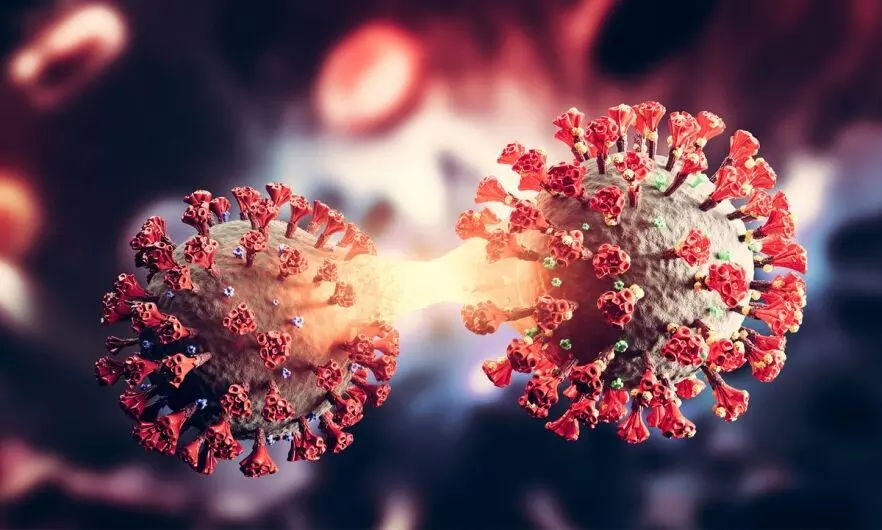

Tokyo: The XBB.1.5 subvariant of SARS-CoV-2 Omicron has high transmissibility and infectivity, according to a study published in the journal Lancet Infectious Diseases.
Researchers at the University of Tokyo in Japan found that the relative effective reproduction number (Re) of XBB.1.5 was 1.2-fold greater than that of the parental XBB.1.
This indicated that an individual with the XBB.1.5 variant could infect 1.2 times more people in the population than someone with the parental XBB.1 variant.
"Our data suggest that XBB.1.5 will rapidly spread worldwide in the near future," said Jumpei Ito from the varsity's Division of Systems Virology.
XBB.1.5 has the "potential to cause the next epidemic surge," said Prof. Kei Sato from the Division of Systems Virology, adding that it needs to be carefully monitored "to safeguard public health".
The researchers found that the XBB.1.5 variant has a novel mutation in the spike (S) protein -- the protein that anchors the virus firmly to the human angiotensin converting enzyme-2 (ACE2) receptor, thus facilitating the invasion of human cells.
Further experiments using pseudoviruses also showed that XBB.1.5 had approximately 3-fold higher infectivity than XBB.1.
The XBB.1.5 S protein was also found to be highly resistant to neutralisation antibodies elicited by breakthrough infection with the BA.2/BA.5 sub variants.
In other words, patients with prior infection from the BA.2/BA.5 subvariants may not show robust immunity against XBB.1.5, increasing their chances of infection and disease.
"The results of our virological experiments explain why the Omicron XBB.1.5 variant has a higher transmissibility than past variants: This variant acquired strong binding ability to human ACE2 while maintaining a higher ability to escape from neutralising antibodies," said Yusuke Kosugi from the Division of Systems Virology, Department of Microbiology and Immunology.