












IAEA chief backs India's fast breeder reactor, calls programme logical and safe
text_fields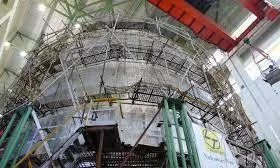

International Atomic Energy Agency (IAEA) Director General Rafael Mariano Grossi has described India's Prototype Fast Breeder Reactor (PFBR) programme as safe, technologically sound, and part of a well-structured long-term nuclear strategy.
In an interview with NDTV, Grossi praised India's achievement in bringing the PFBR at Kalpakkam to criticality, a milestone that advances the country into the second stage of its three-stage nuclear programme.
The PFBR uses fast breeder technology, which produces more fissile material than it consumes and is considered a key step towards the future utilisation of India's vast thorium reserves.
Grossi said fast breeder reactors are a proven technology. "From a purely technological point of view, fast breeders exist and have been in operation. They are safe, and they are a very useful approach to nuclear generation," he said.
He also commended India's broader nuclear roadmap, saying it reflected a coherent long-term vision.
"I think what India has is a very logical concept for the program, with the traditional reactors now moving to this stage, finally the incorporation in the future with the thorium cycle," Grossi said.
Describing the achievement as evidence of the programme's consistency, he added that it was "a confirmation of the seriousness of the program and the sequencing that is fulfilling step after step."
India is among a small group of countries to have successfully developed and operated commercial-scale fast breeder reactor technology. Several advanced economies, including the United States, France, and Japan, scaled back similar programmes due to economic, technical, or political challenges.
Addressing safety concerns related to the reactor's use of liquid sodium coolant, Grossi expressed confidence in India's nuclear safety standards.
"The safety of the nuclear technology is well proven, and in the case of India, they have a large fleet, which is a diverse fleet in India, and has been operating following the nuclear safety standards. So, we do not have a concern in this regard," he said.
Grossi also acknowledged that the PFBR remains outside international safeguards, describing it as part of the strategic realities of the region.
"It is out of safeguards, I am aware of that. So, that aspect, we know, and it is part of the strategic equation in the subcontinent, and it is a fact," he said.
On India's nuclear liability framework, Grossi said the IAEA respects national decisions but emphasised the value of internationally accepted liability regimes for an industry with potential cross-border implications.
He described nuclear liability as one of the most complex areas of law and said the agency continues to maintain a constructive dialogue with India on the issue.
India's PFBR achieved criticality after nearly two decades of development, marking a significant milestone in the country's long-term nuclear energy programme.