






Revival of the INDIA alliance
text_fields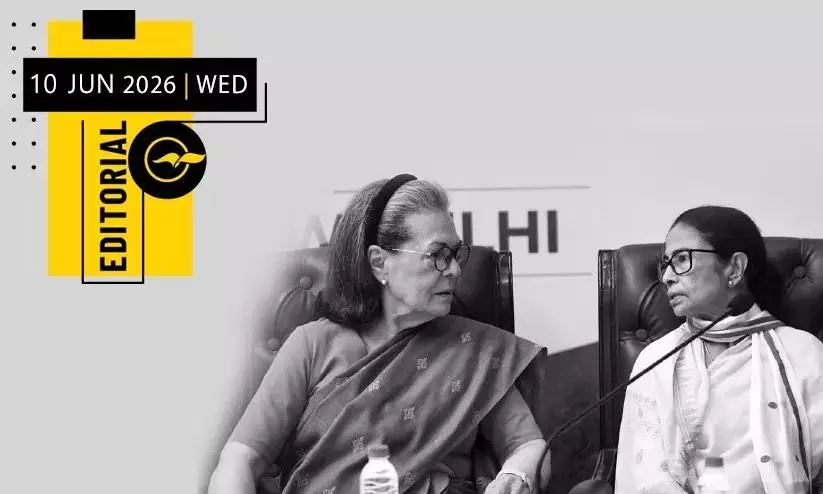

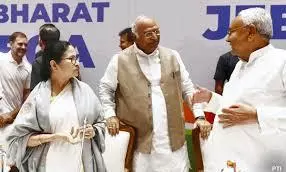
After a long hiatus, the 23-member INDIA alliance met at the office of Congress president Mallikarjun Kharge in New Delhi on Monday and resolved to move forward as a united front despite controversies and accusations in the process. The alliance also decided to convene again in two months. The alliance has decided that from now on it will hold meetings once every two months. Five resolutions including this were unanimously adopted by INDIA. These include sending a joint letter to the Chief Justice of the Supreme Court highlighting alleged irregularities in voter list revisions and electoral manipulation; demanding resignation of the Union Education Minister Dharmendra Pradhan, who betrayed lakhs of students in the NEET and CBSE exam irregularities; urging the Centre to convene an emergency all-party meeting to discuss the worsening economic crisis, inflation, unemployment and agricultural distress; and holding a daily coordination meeting every morning at the office of Opposition Leader Mallikarjun Kharge to formulate a united strategy and organise a coordinated opposition during the Monsoon Session of Parliament. It must be acknowledged that these issues are highly important and relevant in the present circumstances.
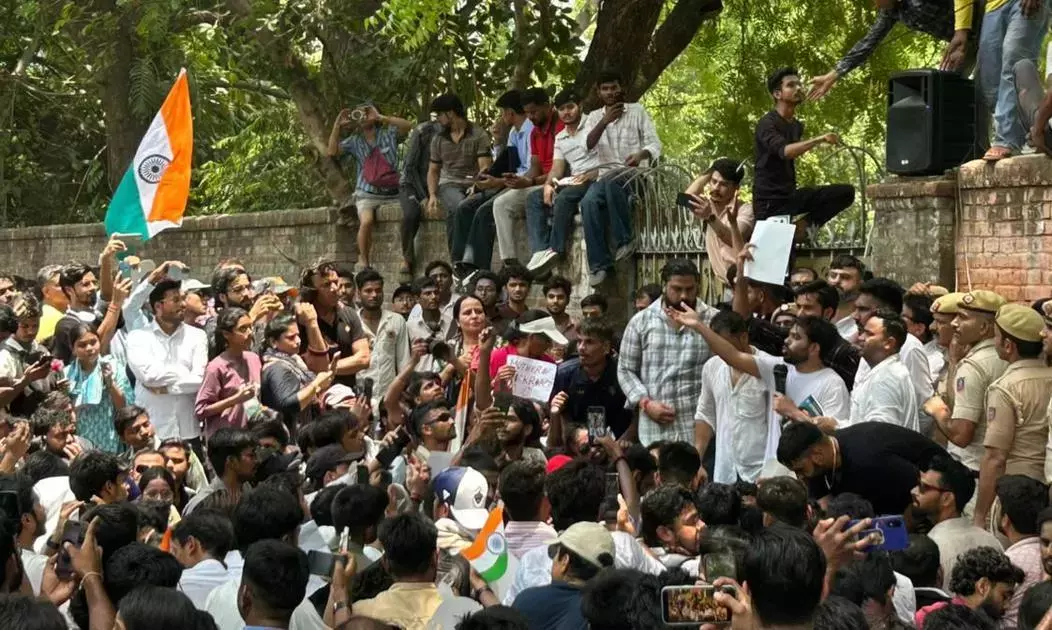
The Bihar, Assam and West Bengal Assembly elections, conducted by the Election Commission , which has become only a tool in the hands of the BJP government and allegedly deprived millions of citizens of their voting rights through the Special Intensive Revision (SIR) process, have naturally helped consolidate the dominance of the Hindutva party ruling at the Centre. Having secured power by allegedly disenfranchising large sections of religious minorities and marginalised communities—whom the Sangh Parivar had branded as infiltrators and non-citizens in all three states—the BJP is now moving ahead with measures that could further curtail a range of civil entitlements and rights, including access to ration benefits. There is no doubt that the same history will be repeated in Uttar Pradesh, where the legislative assembly election is going to take place next year. The reason for the resort to this practice is that the saffron camp has realised that its anti-people governments cannot remain in power through a free and fair electoral process. However, merely writing to the Supreme Court may not be sufficient to secure a review of these developments. At the same time, it is doubtful whether the demand that the Union Education Minister Dharmendra Pradhan should resign by accepting responsibility for the grave sabotage in the NEET and CBSE examinations, will be considered. If the INDIA alliance is prepared to cooperate with the youth collective that has taken to the streets under the banner of the Cockroach Janata Party, it may go some way in forcing the government to open its eyes, at least for a while.
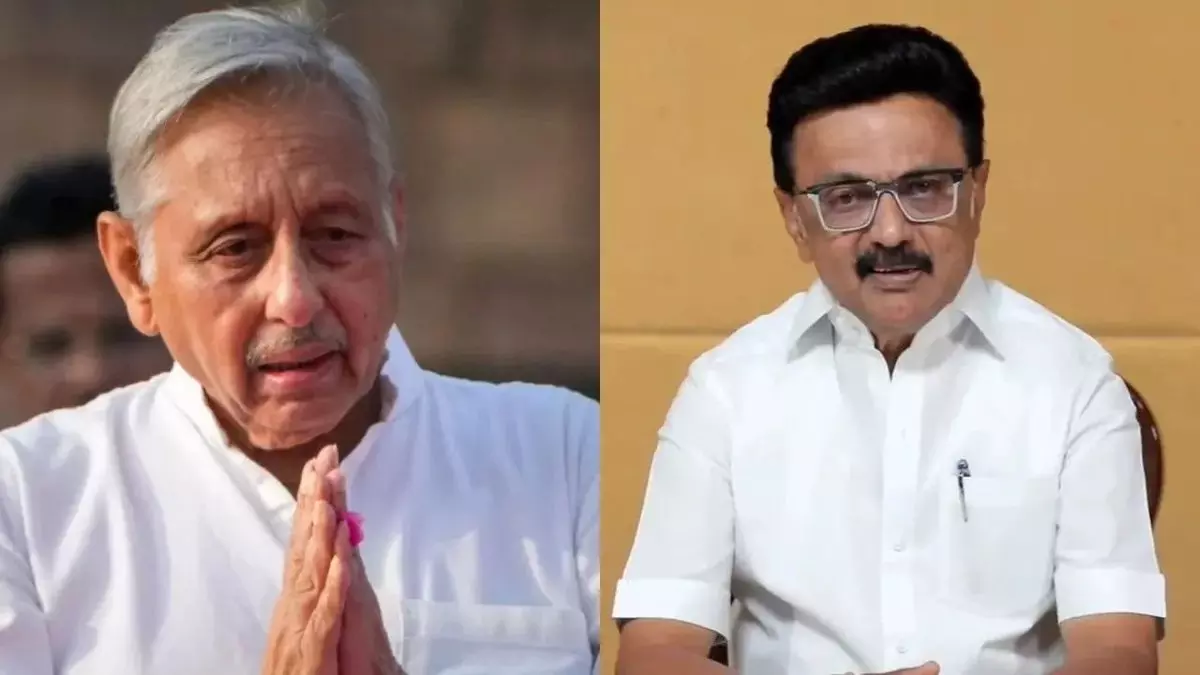
At the same time, the question of how bright the future of the INDIA alliance is certainly relevant. The Aam Aadmi Party, despite maintaining a strong stance against the BJP and the Modi government, is not part of the alliance. Meanwhile, the Dravida Munnetra Kazhagam (DMK), one of the alliance's most active constituents, chose to boycott the meeting, the provocation for this being that the Congress, which contested the Tamil Nadu elections as part of the DMK front and won a few seats, joined the TVK government led by actor Joseph Vijay without even consulting DMK. It may generally be assumed that, had it not been part of the DMK front, the Congress would not have secured any seats. The Congress may have its own justifications. However, it is natural for Stalin and the DMK to feel aggrieved that, despite remaining steadfast in the INDIA alliance and continuing to fight the Modi government and the BJP even when leaders such as Nitish Kumar deserted the coalition, they were set aside for the sake of one or two ministerial positions. Other constituent parties also voiced concerns during the meeting. CPM representative John Brittas criticised Congress leader Rahul Gandhi for alleging during the Kerala Assembly election campaign that the CPM had reached an understanding with the BJP. It is a reasonable demand that Rahul Gandhi, who is also the Leader of the Opposition in Parliament, should take the concerns of the alliance partners into account to a certain extent and keep them together. It is against the extremist Hindutva force, which is rapidly moving along the path of authoritarianism and fascism, disregarding the spirit of the Constitution, that the relatively weak opposition parties have to fight and win. Their only support lies in the goodwill and backing of the real majority comprising OBCs, Dalits and religious minorities. It has already been proven that the extreme right has the ability to buy over many among them by spending billions. At such a critical juncture, the country's secular democratic system can survive only if the secular alliance moves forward in cooperation, with the utmost compromise and restraint.