











Claiming victory over US, Iran refuses nuclear compromise as Trump calls it a bad negotiator
text_fields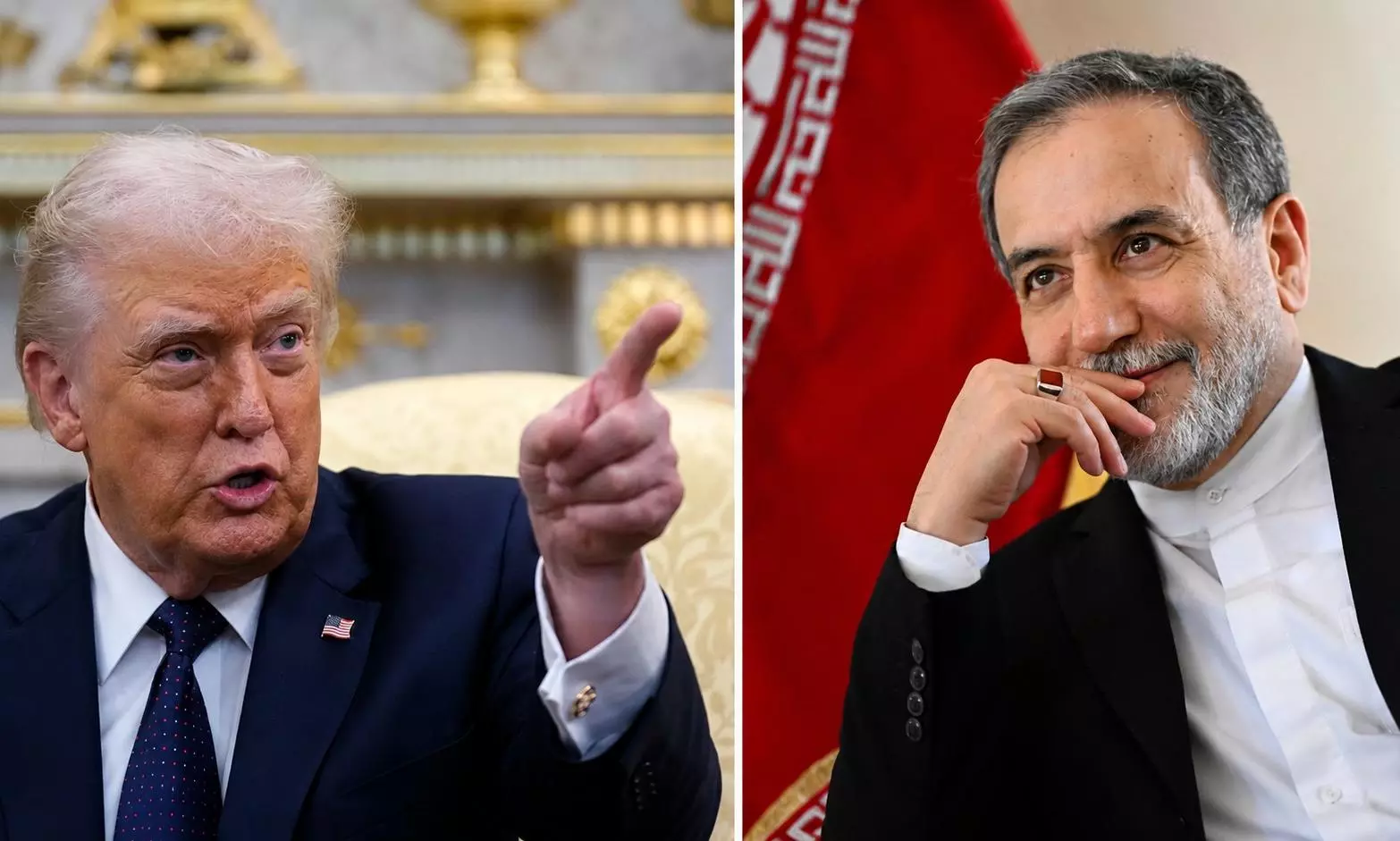

Fragile is the ceasefire prospect of the ongoing US-Israel war with Iran, for despite US President Donald Trump’s repeated claims that a ceasefire is at hand, the situation became even murkier with Iran’s proposal, which rejected the dismantling of its nuclear infrastructure while insisting that control over traffic through the Hormuz Strait remain with Iran and Oman.
The renewed uncertainty emerged after a series of contradictory statements from the US and Iran over negotiations purportedly aimed at ending months of military confrontation, with optimism generated by claims of a breakthrough quickly overshadowed by sharp disagreements over the contents of any prospective agreement.
Trump, who only days ago suggested that a preliminary deal could be signed within the weekend, later accused Iran of negotiating in bad faith and of misrepresenting the understandings reached between the two sides.
Describing Iranian negotiators as “dishonourable people to deal with”, he warned that Iran must “get its act together”, thereby casting doubt on his own earlier optimism regarding an imminent ceasefire.
The diplomatic confusion coincided with fresh military tensions after the US announced that its forces had intercepted multiple Iranian drones allegedly targeting commercial vessels passing through the Strait of Hormuz.
According to US Central Command, all the drones were destroyed and maritime traffic continued without disruption, even as Iran maintained restrictions over the strategically vital waterway.
Adding to the ambiguity, Iranian Foreign Minister Abbas Araghchi stated that the so-called Islamabad Memorandum of Understanding had never been closer to completion, while outlining Iran’s conditions for any settlement.
He said the proposal envisaged the reopening of the Strait of Hormuz and the lifting of the US naval blockade on Iranian ports, but stressed that Iran, together with Oman, would continue to exercise control over navigation through the passage.
On the nuclear question, Araghchi rejected any suggestion that Iran would dismantle its nuclear infrastructure or surrender its stockpile of highly enriched uranium, maintaining instead that the preferred solution was to dilute the material within Iran itself.
He also suggested that a broader settlement could pave the way for easing regional conflicts, including developments involving Lebanon.
Iran also projected the conflict as a strategic success, with the Islamic Revolutionary Guard Corps (IRGC) claiming that the country had emerged “stronger and more capable than ever” despite months of military confrontation.
Maintaining that the US and Israel had failed to achieve their objectives, the IRGC said recent battles had enhanced Iran’s deterrence and intelligence capabilities, shifted the regional balance in Tehran’s favour, and left its armed forces prepared to deliver a swift and severe response to any future aggression.